
When Storm Damaged Trees Require Emergency Removal
Living along the Front Range means dealing with unpredictable weather. One moment you're enjoying a beautiful Bluebird Day, and the next, a fierce mountain storm is rolling through, leaving high winds, heavy snow, and potential property damage in its wake. While our local evergreen and aspen trees are resilient, extreme weather can take a toll, turning a beautiful landscape feature into a sudden liability.
As a homeowner in Evergreen, it is important to know exactly when a damaged tree is simply an eyesore and when it poses a genuine threat to your home, family, or power lines. Emergency tree removal after storm damage is a critical service, but not every broken branch requires cutting down the entire tree.
At Tarzan Tree Care LLC, we frequently help clients navigate the aftermath of severe weather. Let's break down how to assess your property after a storm, how to evaluate tree damage, and when you need to call in the professionals for immediate removal.
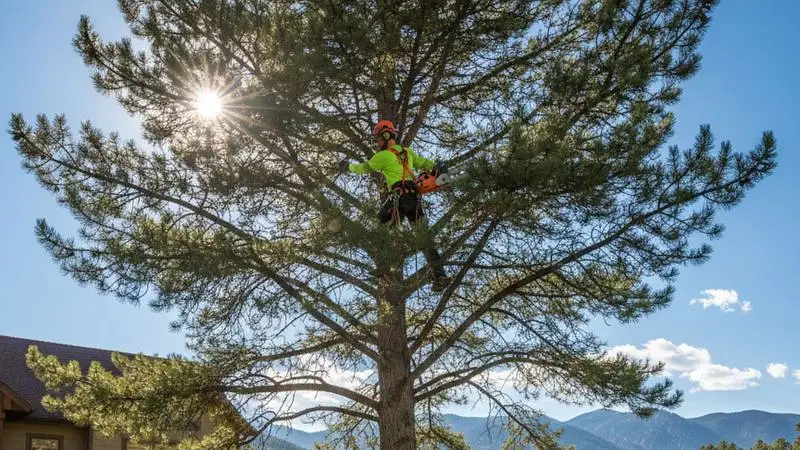
How to Tell if a Storm Damaged Tree Can Be Saved
After a storm passes, your first instinct might be to assume the worst if you see downed branches scattered across your yard. However, trees are incredibly resilient organisms. Understanding how to tell if a storm damaged tree can be saved often comes down to assessing the structural integrity of the main trunk and the remaining crown.
If the damage is limited to smaller branches and the tree's main leader (the primary vertical stem) is intact, the tree will likely recover. Trees that have lost less than fifty percent of their canopy often bounce back with proper pruning and care. In these instances, professional storm damage repair focuses on making clean cuts to jagged, broken limbs. This prevents disease and pests, like the destructive bark beetle, from infiltrating the weakened wood.
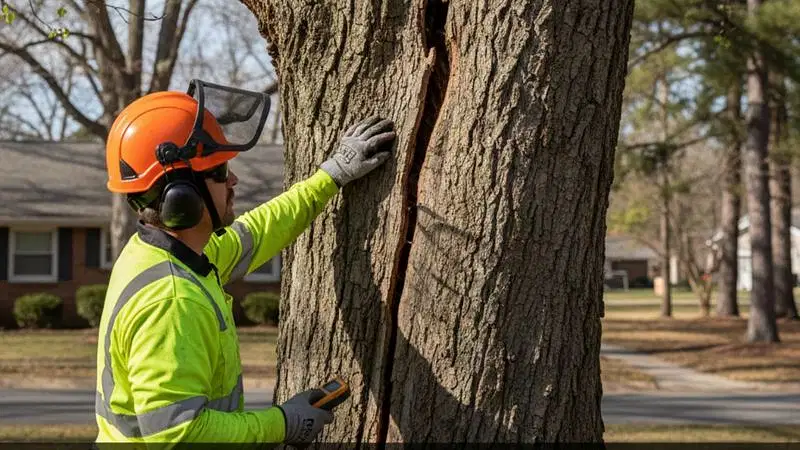
Conversely, if the main trunk is split down the middle, or if a massive structural branch has torn away a large section of the bark and underlying wood, the tree's vascular system might be irreparably compromised. While general landscaping companies might suggest waiting to see if it survives, a heavily fractured trunk usually means the tree cannot support its own weight and will eventually need to be removed to prevent property damage.
Signs of Uprooted, Hazardous, and Leaning Trees
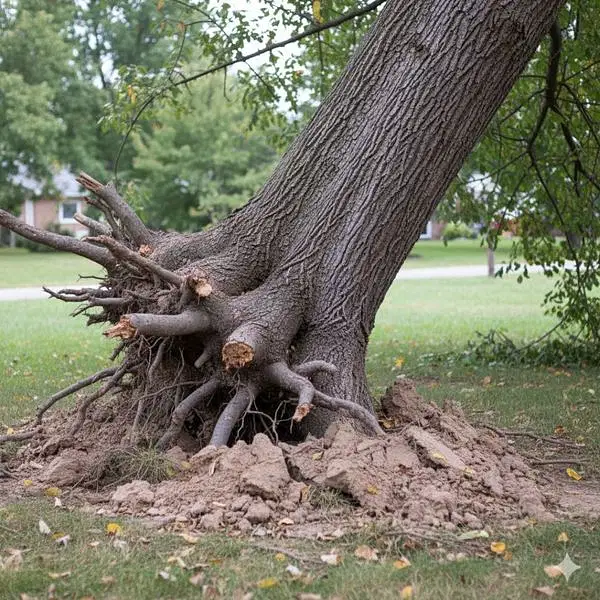
Some storm damage is incredibly subtle, while other damage is an immediate red flag. High winds combined with heavily saturated soil—especially during the spring mud season—can cause complete root failure. Recognizing the signs of uprooted hazardous leaning trees is vital for the safety of your property.
Look for these warning signs around the base and trunk of your trees:
- Soil Heaving: If you notice the soil lifting or cracking on the side opposite of the tree's lean, the root system is actively failing. This tree is no longer anchored securely.
- Sudden Leaning: While some trees naturally grow at a slight angle, a tree that has suddenly developed a severe lean after a storm is an imminent danger.
- Exposed Roots: If major structural roots are suddenly visible above the soil line and look snapped or strained, the tree has lost its foundation.
- Hanging Limbs: Known in the industry as "widow-makers," large, broken branches suspended in the canopy can fall at any moment without warning.
When a tree exhibits these symptoms, especially if it is within striking distance of your home, driveway, or power lines, it transitions from a landscaping issue to a safety emergency. In these situations, attempting a DIY cleanup is highly dangerous. You need professional hazardous tree removal to safely dismantle the tree without causing further destruction.
Navigating Tree Care Costs and Reliability
We know that unexpected property repairs can be stressful. Homeowners frequently ask about landscaping cost and tree removal pricing following a major storm. While the exact cost depends on the size of the tree, its location, and the complexity of the removal, ignoring a hazardous tree always costs more in the long run if it falls on a structure.
One of the biggest challenges during severe weather events in the High Country is finding reliable crews. Labor shortages in the industry often mean that wait times for tree service can be lengthy. That's why it is crucial to work with a licensed and insured local company that prioritizes emergency response and maintains transparent pricing.
Protecting Your Property with Tarzan Tree Care LLC
Storms are a natural part of life in Colorado, but the damage they leave behind doesn't have to permanently compromise your landscape's beauty or your family's safety. Whether you need an assessment of a cracked limb, routine tree trimming, or urgent removal of a dangerous pine, our team is equipped to handle the unique challenges of mountain properties.
If you are concerned about a tree on your property following a recent storm in Evergreen or the surrounding areas, don't wait for the next gust of wind to test its stability. Contact Tarzan Tree Care LLC today for a thorough assessment. We will help you determine the safest, most effective course of action to protect your home and preserve the health of your landscape.